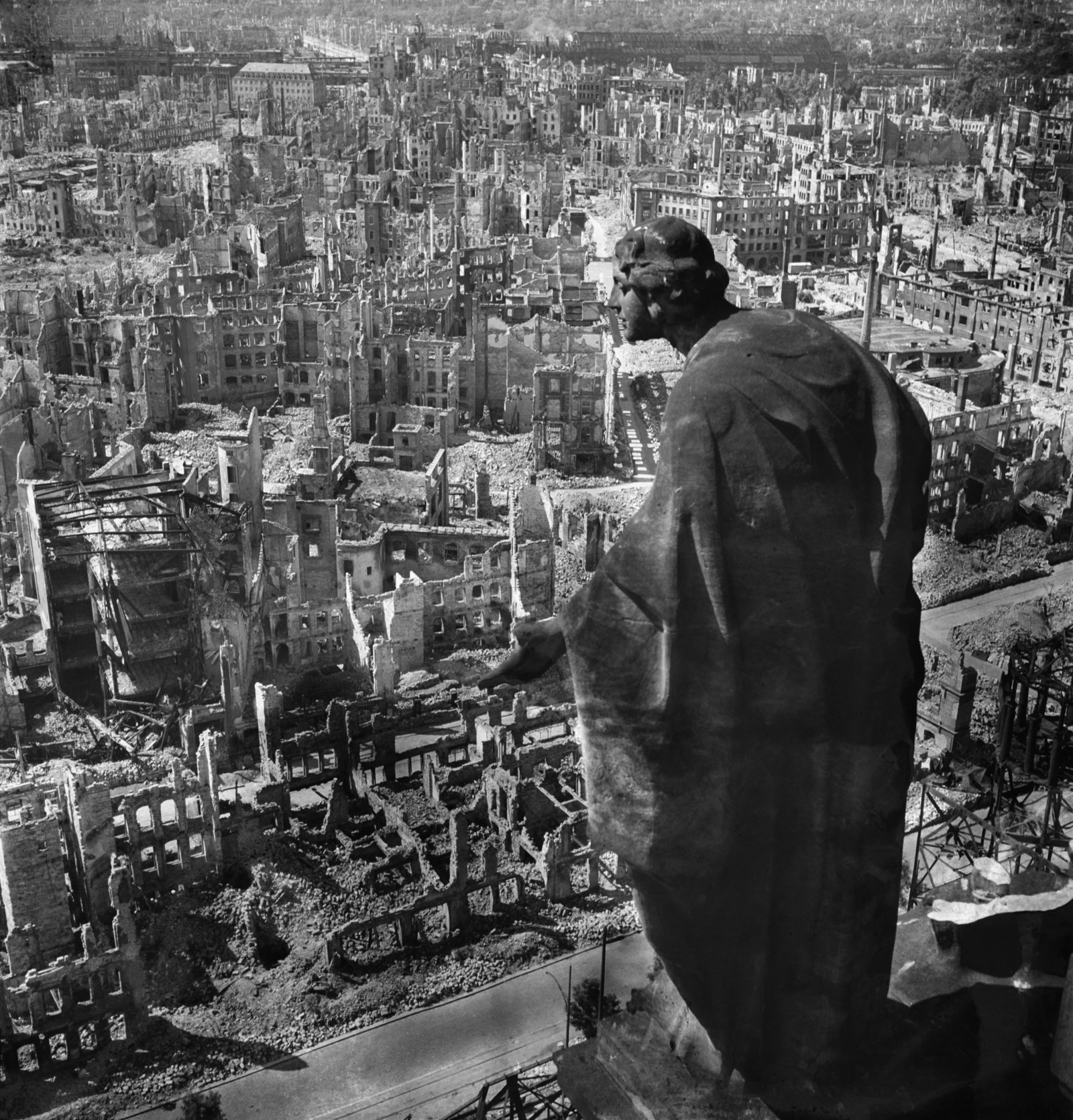
Richard Peter, Photograph of Bonitas Overlooking Dresden (1945)
Morality and the Second World War
Type: Book Chapter
Status: Published
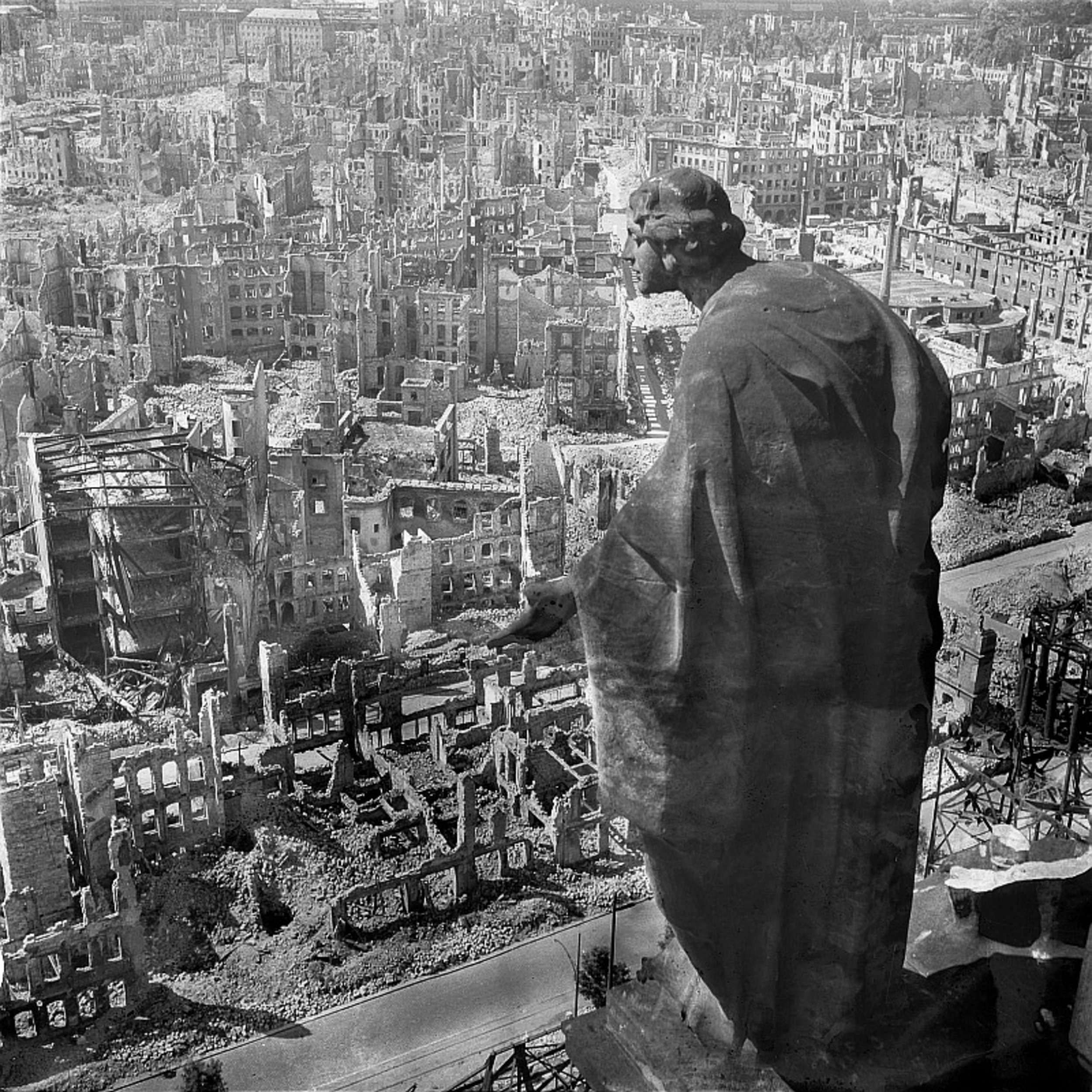
Richard Peter, Photograph of Bonitas Overlooking Dresden (1945)
World War II was arguably the worst calamity in history – the “greatest and most terrible of all human experiences” (Hastings 2011, xx). It was truly the war that surpassed all other wars, the war by which all others are measured – The War. As such, World War II has become a microcosm not only for the history of the twentieth century but for all human history. And as scholars of the war have shown, World War II has shaped not only human politics, economics, and social life, but humanity itself.
Morality, therefore, is central to the study and understanding of the Second World War; and the Second World War has cemented the foundations of modern morality. To begin with, World War II has become the moral paradigm in human history – the archetype for moral thinking in the modern world. By establishing new moral language, symbols, and exemplums, World War II continues to inform how human beings think about right and wrong. World War II has also provided innumerable moral controversies that define our political tribes to this day. Arguably the war’s greatest debate, however, revolves around the moral character of the war itself and whether World War II should be celebrated or condemned. That debate has given the war a forked legacy with contradictory moral imperatives for the post-war world. One imperative demands peace while the other insists on security to prevent a Third World War. These historical struggles will continue among new generations of scholars but our hope for the end of all wars is rooted in understanding the pity of World War II and the equal dignity of all humankind.