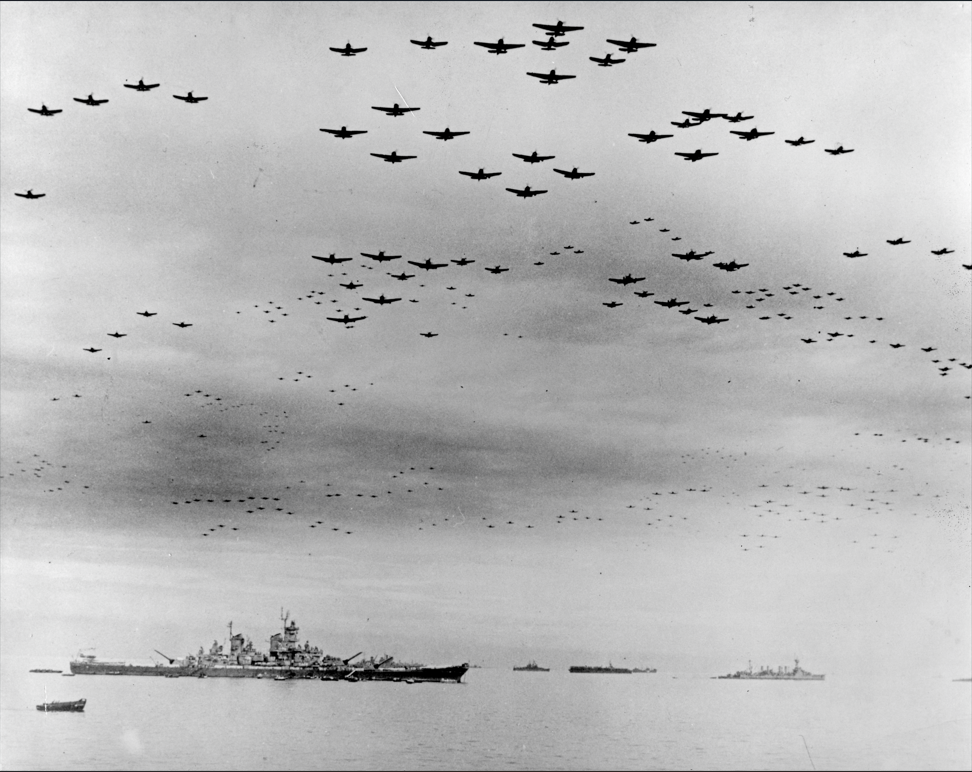
Navy carrier planes fly in formation over the U.S. and British fleets in Tokyo Bay during surrender ceremonies onboard the USS Missouri. #80-G-421130, Naval History and Heritage Command.
Total Victory: Unconditional Surrender and Unlimited War in World War II
Type: Book Manuscript
Status: Under Review
University Press of Kansas
Total Victory explains why the United States pursued victory at practically all costs during World War II. I argue that the United States waged unlimited war to achieve unconditional surrender, not just out of revenge and racism, nor solely to defend the Four Freedoms, but because U.S. strategists believed that total victory was more expedient and more ethical than all other objectives. Total victory, the White House and Pentagon maintained, would enable the United States to win the war and the post-war peace, and create a new international order that could prevent World War III. By assessing how far the United States was willing to go to achieve its goals and how much evil American officials were willing to commit in order to do good, my book suggests that war is a slippery slope and questions the moral supremacy of victory.