War With Impunity: How the Atomic Bombs Overthrew Tokyo’s Mortal and Moral Calculus in the Pacific War
Type: Article
Status: Published
The Journal of American-East Asian Relations 33, No. 2 (8 June 2026): 154-190.
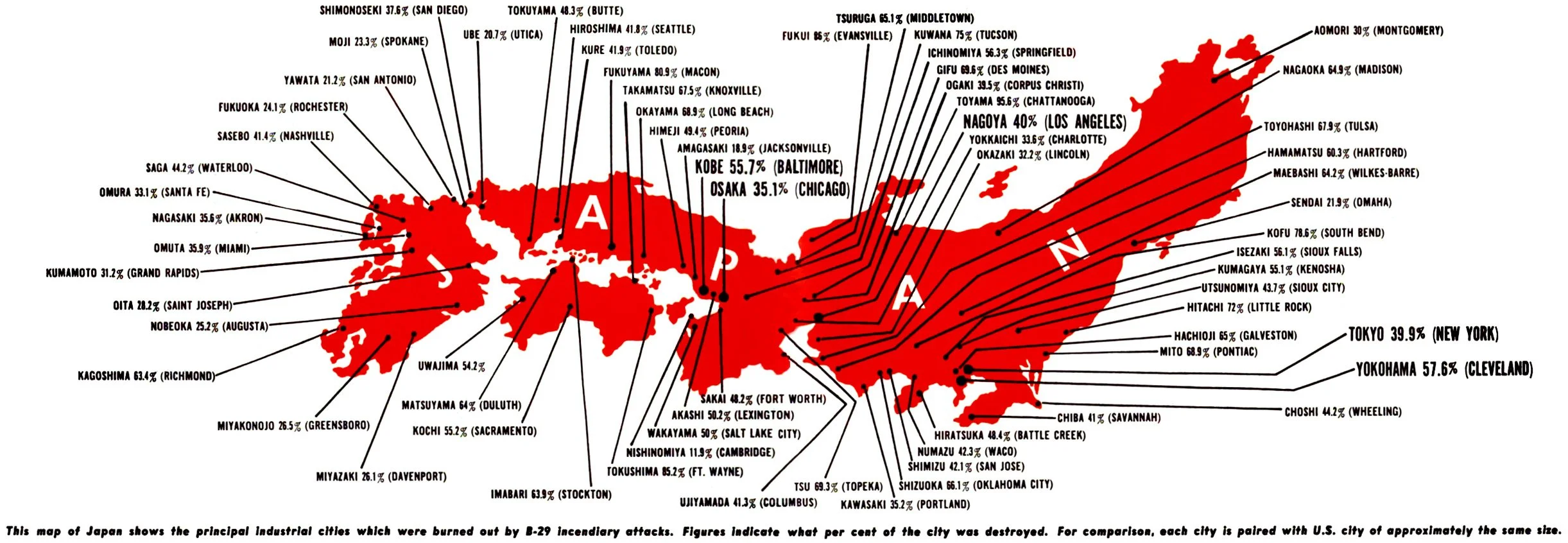
By launching a low-level incendiary attack on Tokyo by night on 9-10 March 1945, General Curtis LeMay’s air forces not only transformed the technical tactics of the strategic bombing campaign, but its moral dimensions. The supposed suicide attack turned out to be horribly one-sided and the air and naval war against Japan became increasingly asymmetrical. Indeed, I contend that the Great Tokyo Fire Raid inaugurated a new moral phase of the Pacific War in which U.S. air and naval forces waged war with impunity.
While U.S. land forces suffered their most horrific casualties yet on Iwo Jima and Okinawa, the combat over and around Japan became more and more one-sided. Throughout the spring and summer of 1945, the United States bombed and blockaded the Japanese home islands by sea and sky with increasing impunity until August 1945 when the 20th Air Force repeatedly annihilated entire cities without any reciprocal casualties. When Japan still refused to surrender, the United States’ asymmetrical warfare culminated in the atomic bombs. The first on August 6, obliterated the city of Hiroshima, and the second on August 9, annihilated the city of Nagasaki – at no cost to the United States.
At the climax of war with impunity, the atomic bombs overthrew Japan’s mortal and moral calculus to achieve peace with honor. The Hiroshima bomb proved that the United States could demolish whole cities for nothing, while the Nagasaki bomb indicated that the United States could annihilate Japan without an invasion. The atomic attacks on Hiroshima and Nagasaki compelled and convinced Tokyo to accept the Potsdam Declaration, quit fighting, concede defeat, and surrender at the discretion of the Allies – in short, to surrender unconditionally.
At the same time, the atomic bombs and America’s war with impunity created a disturbing moral dilemma for the United States by challenging the “Western Way of War” and the principles of reciprocity in war.