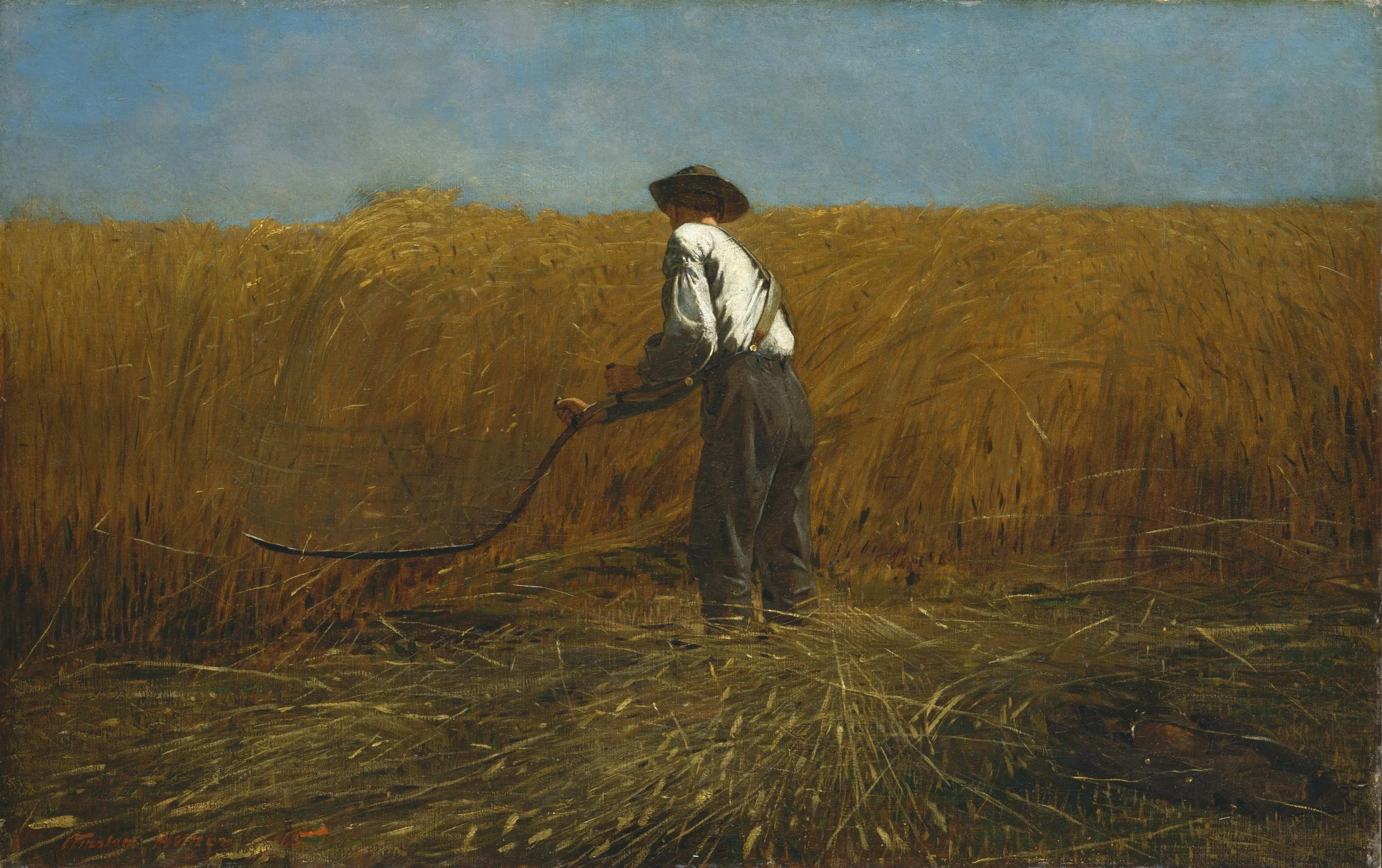
Winslow Homer, The Veteran in a New Field (1865)
American Historiography Since 1865
Level
Graduate
Type
Seminar
“If the past came without gaps and problems, there would be no task for the historian to complete. And if the evidence that existed always spoke plainly, truthfully, and clearly to us, not only would historians have no work to do, we would have no opportunity to argue with each other. History is, above all else, an argument. It is an argument between historians. ...Arguments are important; they create the possibility of changing things.”
HIS 726 is an intense text- and discussion-based seminar on modern American historiography. The course introduces graduate students to classic and recent works in modern US history and examines major historical themes, questions, and movements since the end of the American Civil War.
At the undergraduate level, “history” is primarily about the past, but at the graduate level, “history” largely refers to the interpretation of the past. In this class, therefore, graduate students must make the intellectual leap from making historical narratives and arguments or interpretations to historical interventions or contributions. That is, students must become familiar with the historical schools of thought about a given topic or time period in order to understand how new research intersects or intervenes with previous and current scholarship. Put another way, graduate students must learn to write essays that are not only clear, organized, and persuasive, but also valuable. In upcoming comprehensive exams, students will need to know not only what happened in the past and why, but how historians have interpreted the past, and how their evolving methodologies and expanding source bases have changed their consensus or conflicting interpretations over time.